

3003 aluminum-manganese rust-proof aluminum sheet is the most widely circulated general-purpose product in the global aluminum trade. While its price is highly transparent, price differences between different suppliers can reach over $400/ton, indicating it's not simply a matter of "aluminum ingots plus processing fees." Looking at the market situation in the third quarter of 2026, the mainstream FOB export price range for standard 1.0-3.0mm thick 3003-H14 aluminum sheets was $3700~4100/ton. All compliant product prices were higher than the LME aluminum ingot benchmark price for the same period, and there were no unreasonably low prices below raw material costs. As a supplier deeply involved in the export market for many years, our experience is that most buyers only focus on aluminum ingot price fluctuations to calculate costs, often ignoring the hidden price differences caused by processing standards, tolerance control, and delivery methods. Ultimately, the overall procurement cost exceeds expectations.
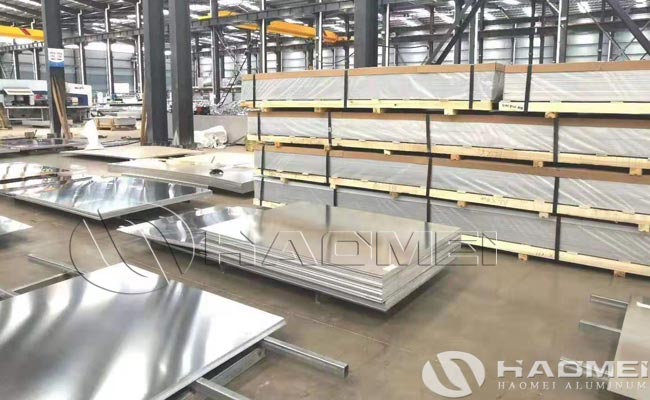
The LME aluminum ingot price is the core anchor for 3003 aluminum sheet price, accounting for approximately 75% of total costs and being the primary driver of price fluctuations. The industry's common pricing logic uses the average monthly settlement price of LME spot aluminum ingots as a benchmark. In the third quarter of 2026, the LME spot aluminum price was expected to trade between $3200 and $3350 per ton, with the mainstream average transaction price around $3250 per ton. For every $100 per ton fluctuation in aluminum ingot prices, the price of 3003 aluminum sheet fluctuates by approximately $75 per ton, demonstrating a direct and clear transmission effect. For customers making long-term bulk purchases, the industry typically employs two models: "monthly average price settlement" or "locked-in long-term contracts." The former involves sharing risks based on market conditions, while the latter locks in costs and mitigates volatility; this is also the preferred cooperation method for large overseas clients.
The differentiation in processing fees is the core reason for significant price differences for the same specifications and is also the aspect that best reflects the differences in supplier quality. For standard 1.0-3.0mm thick 3003-H14 aluminum sheet, the industry-compliant processing fee ranges from $500 to $650 per ton, corresponding to an FOB total price of approximately $3750 to $3900 per ton. This cost includes the entire process from alloy smelting and hot/cold rolling to annealing, surface finishing, and standard packaging. If leveling and cutting to flat sheets are required, additional costs for leveling, cutting, and stacking are added, increasing the processing fee by $120 to $200 per ton, resulting in a total price of approximately $3870 to $4100 per ton. Thinner coils require more rolling passes, resulting in higher processing fees. Processing fees for coils thinner than 0.5mm are typically more than 30% higher than for standard thicknesses. Regarding the temper, the H24 stabilized state is $50 to $80 per ton more expensive than the H14 work-hardened state, while the O temper (soft state) has a more complex annealing process, increasing the processing fee by another $100 to $150 per ton.
From a procurement perspective, the hidden costs behind low prices are most easily underestimated, which is the most common selection pitfall we encounter when dealing with clients. Many suppliers offer low-price introductory quotes that actually use the lowest possible tolerances—a nominal 1.0mm thickness may actually be only 0.92mm. While this may seem cheaper by 3% to 5% per ton, the actual unit cost is higher when considering the actual usable area. Some manufacturers also reduce manganese content to control costs; nominally 3003 alloy, the actual manganese content is only 0.8%, resulting in substandard rust resistance. Used outdoors or in humid environments, it will rust within two or three years, and the subsequent replacement cost will far exceed the initial savings. We have encountered many clients who switched orders after initially purchasing non-standard plates at low prices, only to find that the combined cost of rework and waste was 20% higher than choosing standard plates, making it a losing proposition.
Trade terms and additional services also directly affect the final cost; therefore, it is crucial to clearly define the pricing benchmark during procurement. Industry default quotes are mostly FOB China port prices, including domestic transportation, export customs clearance, and standard wooden pallet moisture-proof packaging. For CIF prices, additional ocean freight and insurance are required, with freight costs varying by $150-$600 per ton depending on the destination port. Customized services such as surface coating, precise slitting, custom sizing, and fumigation packaging will also increase costs by $30-$120 per ton.
As Haomei Aluminum, we consistently adhere to transparent pricing with standard tolerances and national standard composition. Our processing fees remain within a reasonable range for the industry, and we do not offer non-standard products as a low-price gimmick. All our 3003 aluminum sheets are manufactured strictly according to ASTM B209 standards, with each batch accompanied by a complete material testing report. We support tiered discounts for bulk orders and long-term contract pricing services, helping overseas customers achieve precise cost control while ensuring quality.
About Us
| News
| Products
| Download
| Contact Us
Haomei Aluminum is a large-scale listed company in China, which is engaged in the processing of aluminum sheet, aluminum coil, aluminum strip, aluminum circle and aluminum foil. With an annual capacity of 200,000 tons, Haomei Aluminum provides varieties of aluminum products to more than 30 countries in the world.
Address: No.14 Waihuan Road, New district, Zhengzhou, China.


