

The 1/8’’ 5052 aluminum sheet is a medium-thickness aluminum alloy plate commonly used in the market. With a nominal thickness of 0.125 inches—approximately 3.175 mm—it is sometimes referred to as "3.2 mm 5052 aluminum sheet" in procurement, processing, and technical drawings. However, the specific nominal thickness and allowable tolerances should always be verified against the applicable project standards.
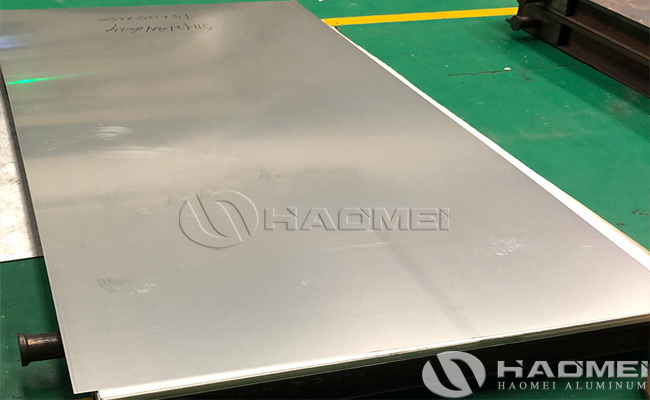
5052 is a non-heat-treatable aluminum-magnesium (Al-Mg) alloy, characterized by good corrosion resistance, weldability, and formability (specifically in bending), as well as moderate strength. This material is frequently used for sheet metal components, welded structures, vehicle panels, marine auxiliary parts, storage tank shells, and protective equipment guards.
Typical tempers for 1/8’’ 5052 aluminum sheet include H32, H34, O, and H112. Among these, 5052-H32 aluminum sheet is particularly common in sheet metal fabrication. The H32 temper indicates that the material has been strain-hardened and then stabilized to a "quarter-hard" condition, offering an optimal balance between strength, flatness, and formability.
5052 aluminum alloy typically contains approximately 2.2%–2.8% magnesium, along with a small amount of chromium. Compared to aluminum 3003, 5052 aluminum generally offers higher strength and superior corrosion resistance. While 5052 is better suited for complex bending and welding than 6061-T6, it cannot achieve the high strength levels of 6061-T6 through heat treatment.
Actual mechanical properties are influenced by temper, thickness, test orientation, and applicable standards such as ASTM B209/B209M. For load-bearing components, pressure vessels, or structures intended for marine environments, refer to engineering design requirements, material certificates, and project specifications.
Based on an aluminum alloy density of approximately 2.68 g/cm³, the theoretical weight of a 1/8’’ (3.175 mm) thick 5052 aluminum sheet is approximately:
8.51 kg/m²
1.74 lb/ft²
Common sheet dimensions include:
48 in × 96 in (4 ft × 8 ft)
48 in × 120 in (4 ft × 10 ft)
60 in × 120 in (5 ft × 10 ft)
72 in × 144 in (6 ft × 12 ft)
Custom cutting to drawing specifications is available.
For example, a 48 in × 96 in sheet of 1/8’’ 5052 aluminum has a theoretical weight of approximately 55.7 lb (approx. 25.3 kg) per sheet. Actual net weight may vary slightly due to thickness tolerances, sheet dimensions, and weighing methods.
Typical applications of 1/8'' aluminum sheet 5052 including:
Marine cabin components, deck fittings, gangways, and non-critical structural parts;
Trucks, trailers, vehicle bodies, toolboxes, and interior vehicle linings;
Fuel tanks, water tanks, storage tank shells, and protective cladding for chemical equipment;
Cabinets, equipment enclosures, workbenches, and bent sheet metal components;
Architectural curtain wall attachments, decorative panels, and substrates for anti-slip (tread) plate fabrication.
For applications involving long-term immersion in seawater, primary vessel structural components, or parts requiring classification society approval, marine-grade aluminum alloys—such as 5083 or 5086 in appropriate tempers—must be evaluated according to design specifications; 5052-H32 should not be used as a direct substitute without such assessment.
5052-H32 aluminum sheet is suitable for shearing, punching, bending, and welding. For bending operations, it is recommended to perform test runs to verify parameters such as the inner bend radius, bending direction, tooling conditions, and surface finish requirements. For visible surfaces, a protective film (PVC coating) can be requested to minimize scratches during processing and transport. Welding should be performed using filler materials and processes compatible with Al-Mg alloys, with specific procedures validated through a formal Welding Procedure Qualification (WPQ).
Haomei Aluminum supplies 1/8’’ 5052 aluminum sheets—available as cut-to-size sheets or sheets processed from coils—and can provide documentation compliant with ASTM B209, apply PVC protective film, and utilize moisture-resistant packaging suitable for export.
About Us
| News
| Products
| Download
| Contact Us
Haomei Aluminum is a large-scale listed company in China, which is engaged in the processing of aluminum sheet, aluminum coil, aluminum strip, aluminum circle and aluminum foil. With an annual capacity of 200,000 tons, Haomei Aluminum provides varieties of aluminum products to more than 30 countries in the world.
Address: No.14 Waihuan Road, New district, Zhengzhou, China.


